About LCD and touch screen with optical lamination by OCA
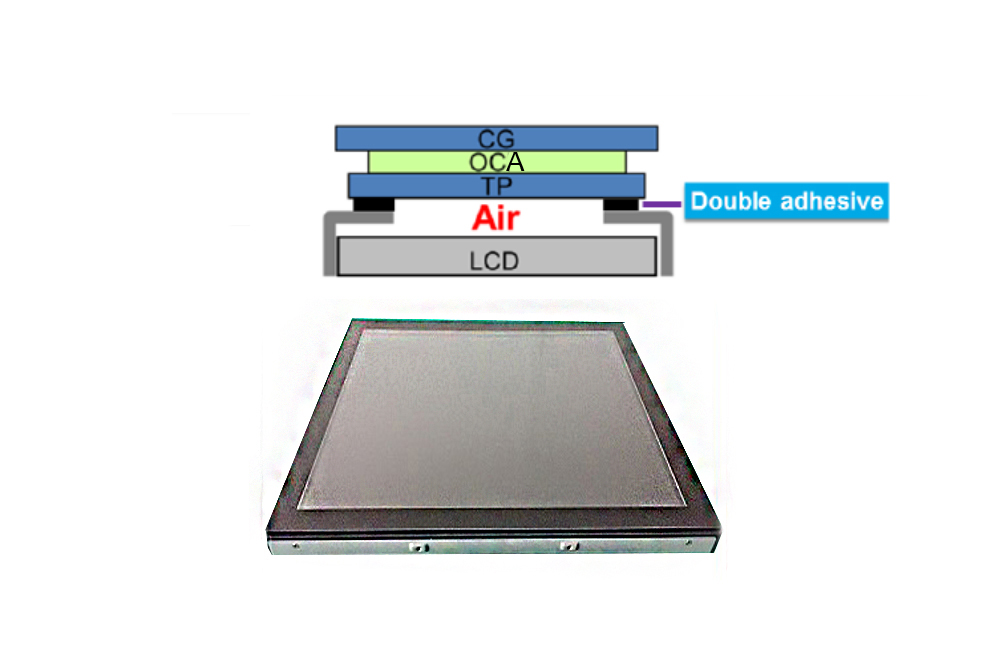
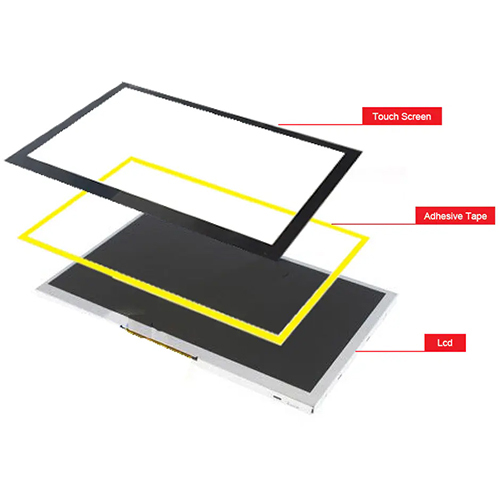
Frame/BezelBonding
It is a traditional method, bond the touch screen to the LCD frameby 3M adhesive tape or foam adhesive tape. There is air gap between the touch and LCD.
Suitable for the general consumer electronics, cheap cost application products, small sizes solutions.
1. Make frame bonding TOOLS
2. Bond in DUST-FREE workshop
3. Strict QUALITY control
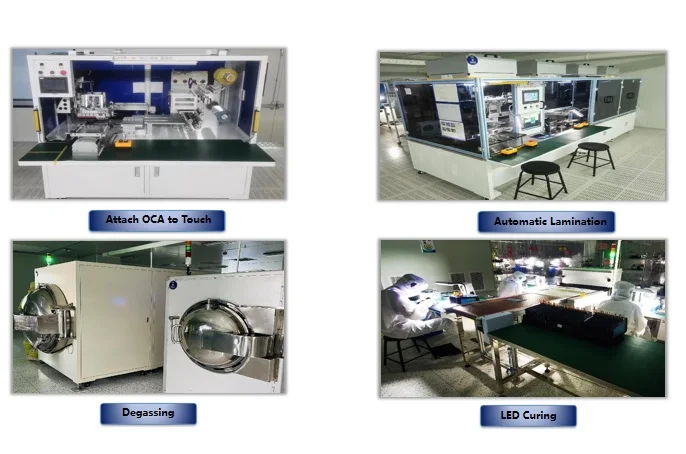
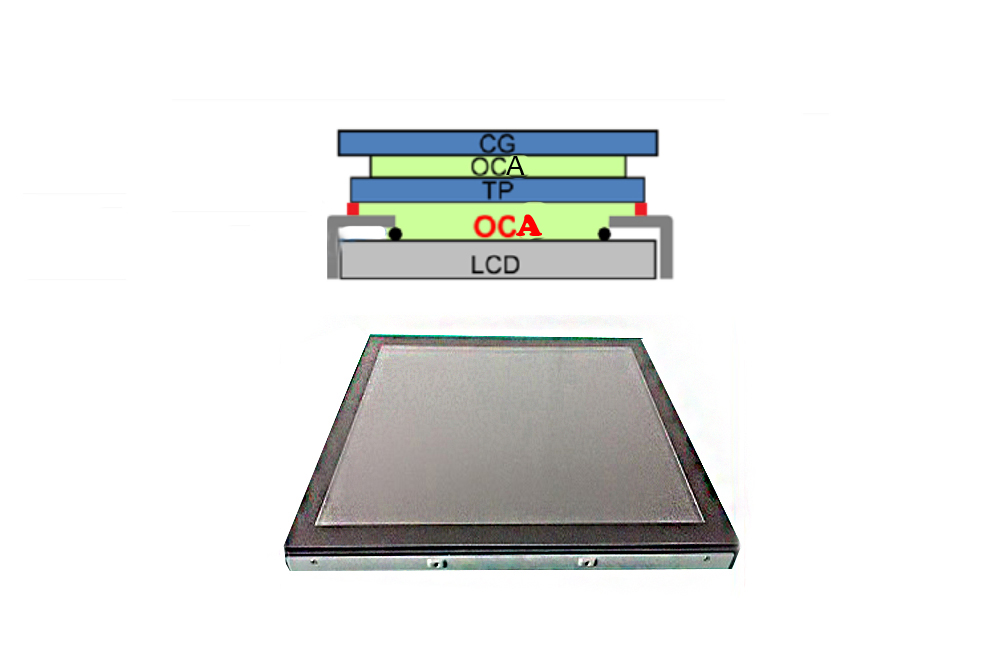
FullLamination-OCA
1.Surface PretreatmentClean the surfaces of the touch screen and LCD to remove dust, oil, and impurities.
2.OCA Lamination (for Small to Medium-Sized Displays)Precisely attach the OCA adhesive film onto the touch screen using a vacuum laminator. Then bond the touch screen to the LCD.
3.Vacuum Thermal PressingCure the OCA adhesive completely through thermal pressing under vacuum, then degassing.
4.UV Curing & Quality InspectionDo UV curing andoptical inspection to verify lamination quality (e.g., bubble count, alignment accuracy, and transmittance).
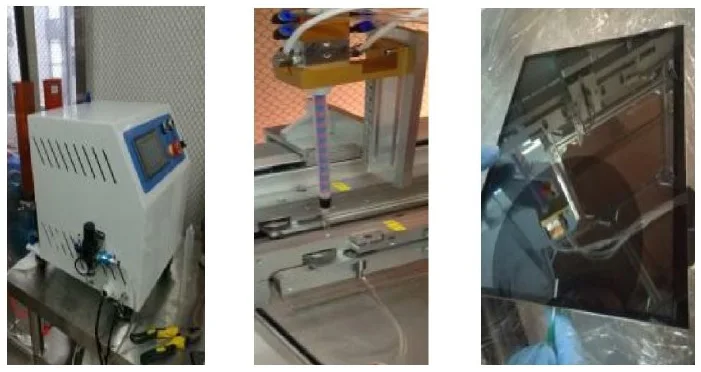
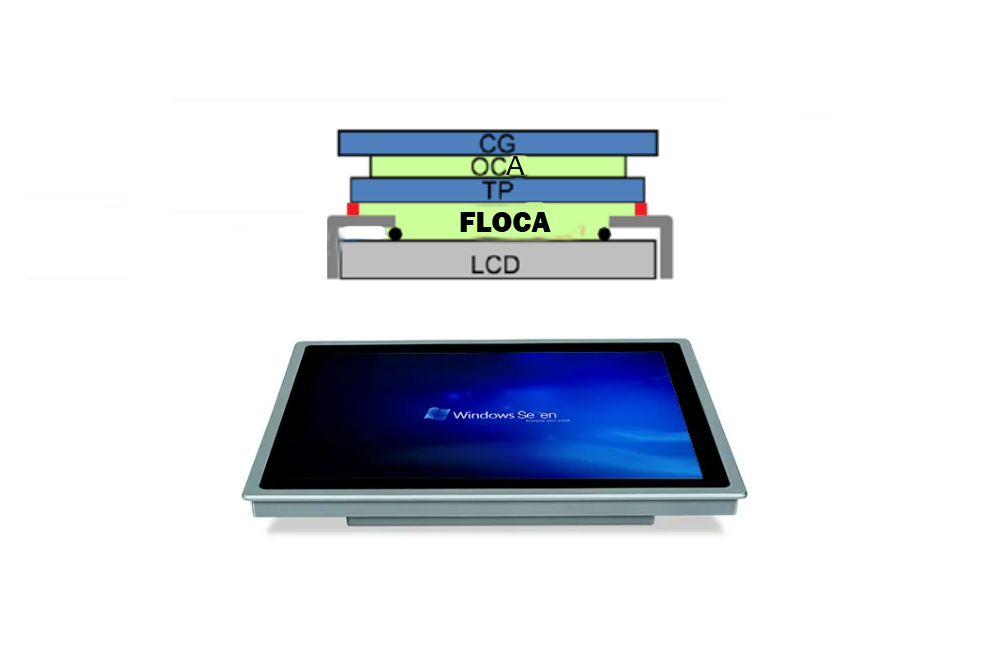
Full Lamination -FLOCA (Fill Liquid Optical Clear Adhesive)
We developed a full lamination solution by FLOCA, which have advantages in the full lamination between capacitive touch screen and LCD module, especially big size LCD with metal frame , or capacitive touch screen with curved or abnormal shapes.
Advanced Optical LaminationThis display utilizes OCA (Optical Clear Adhesive) lamination to bond the LCD panel and capacitive touch sensor, resulting in superior clarity, high light transmittance, and reduced internal reflections. The process ensures a seamless display surface, enhances durability, and maintains strong anti-fingerprint properties.
Durable and User-Friendly DesignBuilt for intensive use, the screen features a hardened surface (>6H), anti-scratch treatment, and an IP65 front panel. These elements make it ideal for frequent touch interactions in public, industrial, medical, and commercial environments, supporting over 50 million touch cycles with high accuracy.
Exceptional Visual PerformanceEnjoy vivid images and sharp text with a resolution of 1024 x 600 pixels, a refresh rate of 60 Hz, and a wide color range. The combination of high contrast ratio and excellent viewing angles ensures consistent, vibrant visuals from nearly any direction.
FAQ's of LCD and touch screen with optical lamination by OCA:
Q: How does the OCA optical lamination enhance the display quality?
A: OCA optical lamination binds the touch sensor and LCD tightly, minimizing air gaps and reducing internal reflections. This process increases light transmittance above 85%, resulting in clearer images, higher brightness, and improved durability against environmental contaminants.
Q: What applications are best suited for this touch screen solution?
A: This product is designed for interactive displays, kiosks, medical equipment, industrial controls, commercial terminals, and consumer electronics requiring robust touch performance, excellent visibility, and high durability in demanding environments.
Q: When should I consider using a panel mount versus an adhesive mount?
A: Panel mounting is ideal for permanent installations in equipment or enclosures, offering robust protection. Adhesive mounting allows for easier retrofitting or integration onto flat surfaces, which is useful for custom or temporary applications.
Q: Where can this LCD touch screen be deployed?
A: With its wide operating temperature range (-20C to 70C) and IP65-rated front panel, this device can be installed both indoors and in semi-protected outdoor locations across industrial, medical, retail, and commercial settings.
Q: What are the main benefits of the anti-fingerprint and anti-scratch surface treatment?
A: These treatments provide a cleaner viewing experience with fewer smudges and increased scratch resistance (>6H hardness), maintaining the screen's clarity and touch accuracy, even after prolonged and intensive use.
Q: How is the touch functionality integrated and powered?
A: The screen uses capacitive touch sensors, supporting up to 10 simultaneous touch points. It is externally powered via a 5V DC supply and connects using USB, I2C, LVDS, or HDMI interfaces, making integration with Android, Windows, or embedded Linux systems straightforward.
Q: What distinguishes this LCD touch screen from standard models?
A: Enhanced features include optical lamination for improved clarity and durability, IP65 front protection, multi-system compatibility, wide viewing angles, and a robust touch life, making it suitable for high-traffic or challenging environments.






 Send Inquiry

 Send Inquiry
 Send Inquiry
 Call Me Free